
 2026-03-03
 Shenzhen Beta Co., Ltd
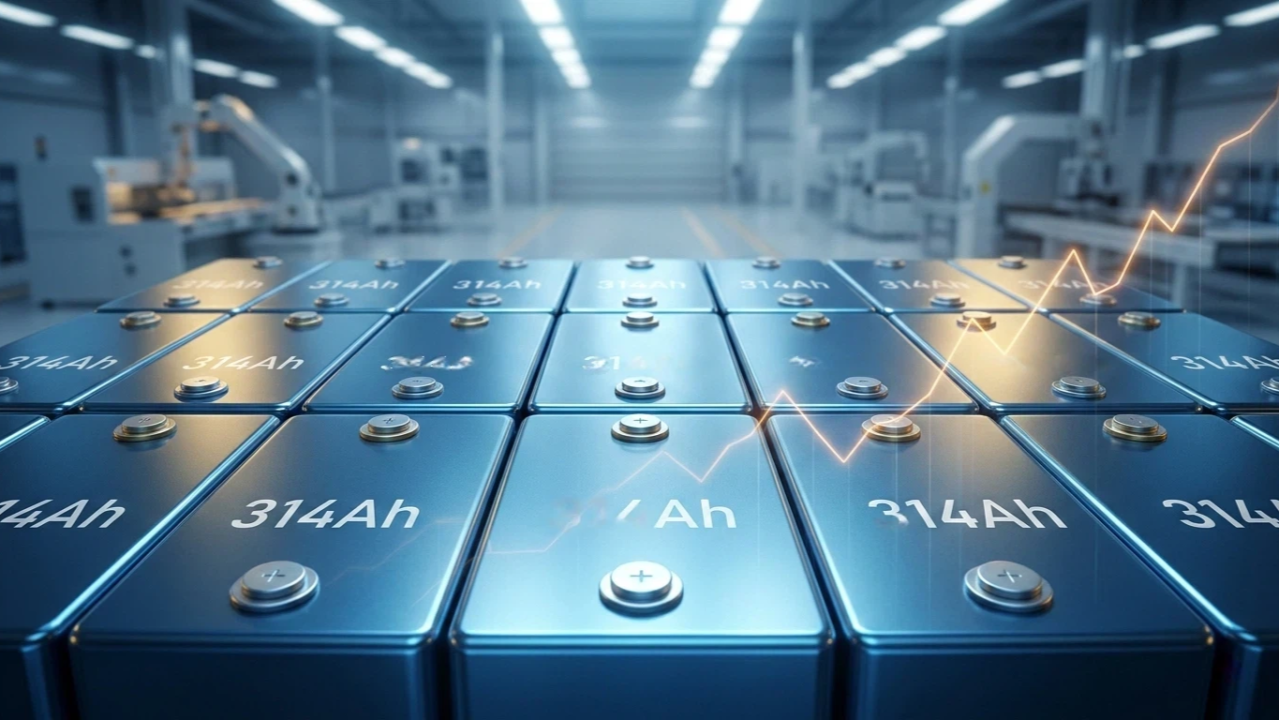
At the start of 2026, the energy storage industry was hit by a sharp surge in prices. On February 25, lithium carbonate futures briefly broke the $24,700/ton (170,000 RMB) mark before pulling back slightly. This is a staggering shift from October 2025, when prices hovered around $10,170/ton—a 100% increase in just a few months.
Driven by this extreme volatility in raw material costs, the industry's flagship product, the 314Ah cell, is facing a severe price test. Current quotes from Tier-1 manufacturers are now rapidly approaching the critical $0.058/Wh (approx. 0.4 RMB) threshold.
I. Four Core Drivers: Why Are Cell Prices "Leaping" Higher?
Since August 2025, the price of 314Ah cells has climbed by approximately $0.0087/Wh. This "staircase" jump is the result of a complex mix of costs, supply-demand imbalances, policy shifts, and market sentiment.
1. Across-the-Board Cost Surges and Profit Recovery
Beyond lithium carbonate, prices for copper, aluminum, and electrolytes have climbed simultaneously.
Cost Sensitivity: When lithium carbonate rises from $10,170 to $26,150/ton, the theoretical production cost of a 314Ah cell jumps from $0.04/Wh to over $0.052/Wh—an increase of nearly 30%.
Supplier Rebound: After two years of losses, material manufacturers are raising prices to restore profit margins amidst recovering demand.
2. Structural Supply-Demand Mismatch
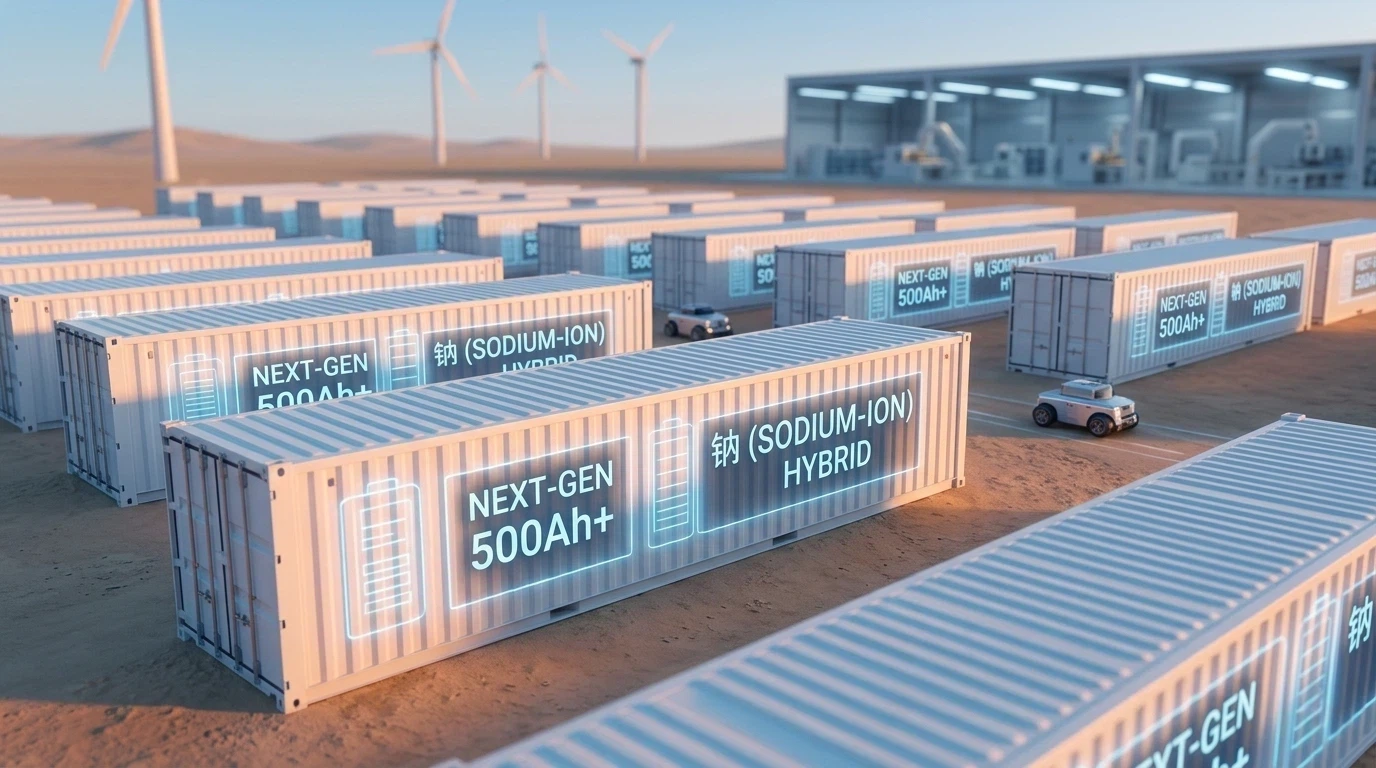
The market is in a "vacuum period" as it transitions to 500Ah+ large cells, creating a temporary gap in production capacity.
Capacity Gap: Manufacturers have largely halted expansion of 314Ah lines, yet 500Ah+ capacity won't reach mass volume until H2 2026. This has turned 314Ah stock into a scarce resource.
Global Demand Explosion: Significant growth in China, the Middle East, and Europe has intensified the global supply crunch.
3. Policy-Induced "Rush-to-Install"
Export Rebate Adjustments: Effective April 1, 2026, the export tax rebate for batteries will drop from 9% to 6%. To save roughly $0.0015/Wh in costs, international buyers are rushing to lock in orders before the deadline.
Grid Connection Pressure: Policy-driven completion deadlines have turned January into a peak season, with major players signing massive overseas contracts.
4. Market Sentiment and Speculation
Anticipation of further price hikes has triggered speculative buying, as companies adjust quotes upward based on market volatility expectations.
II. $0.058/Wh: The "Red Line" for Project Returns
Rising cell prices are already impacting system integrators. Industry experts view $0.058/Wh (0.4 RMB) as the economic "tipping point" for energy storage projects.
Tiered Pricing Distribution: * Tier-1: Nearing $0.058/Wh
Tier-2: Approx. $0.051/Wh
Tier-3/4: Approx. $0.048/Wh
Investor Concerns: If prices stay above the $0.058 level, private investment in independent energy storage may shrink, potentially cooling down overall demand.
III. Outlook: The "Second Half" Turning Point
Analysts predict that while 314Ah cells may break the $0.058/Wh mark in the short term, this is likely a temporary peak rather than a long-term trend.
New Capacity Relief: As 500Ah+ production lines come online in late 2026, the structural shortage will ease.
Sodium-Ion Alternative: Sodium-ion batteries (now approx. $0.075/Wh) are acting as a strategic backup, helping to balance lithium prices through "hybrid" storage models.
2026 remains a year of deep structural maneuvering, as system integrators diversify their technology and supply chains to navigate raw material volatility.
